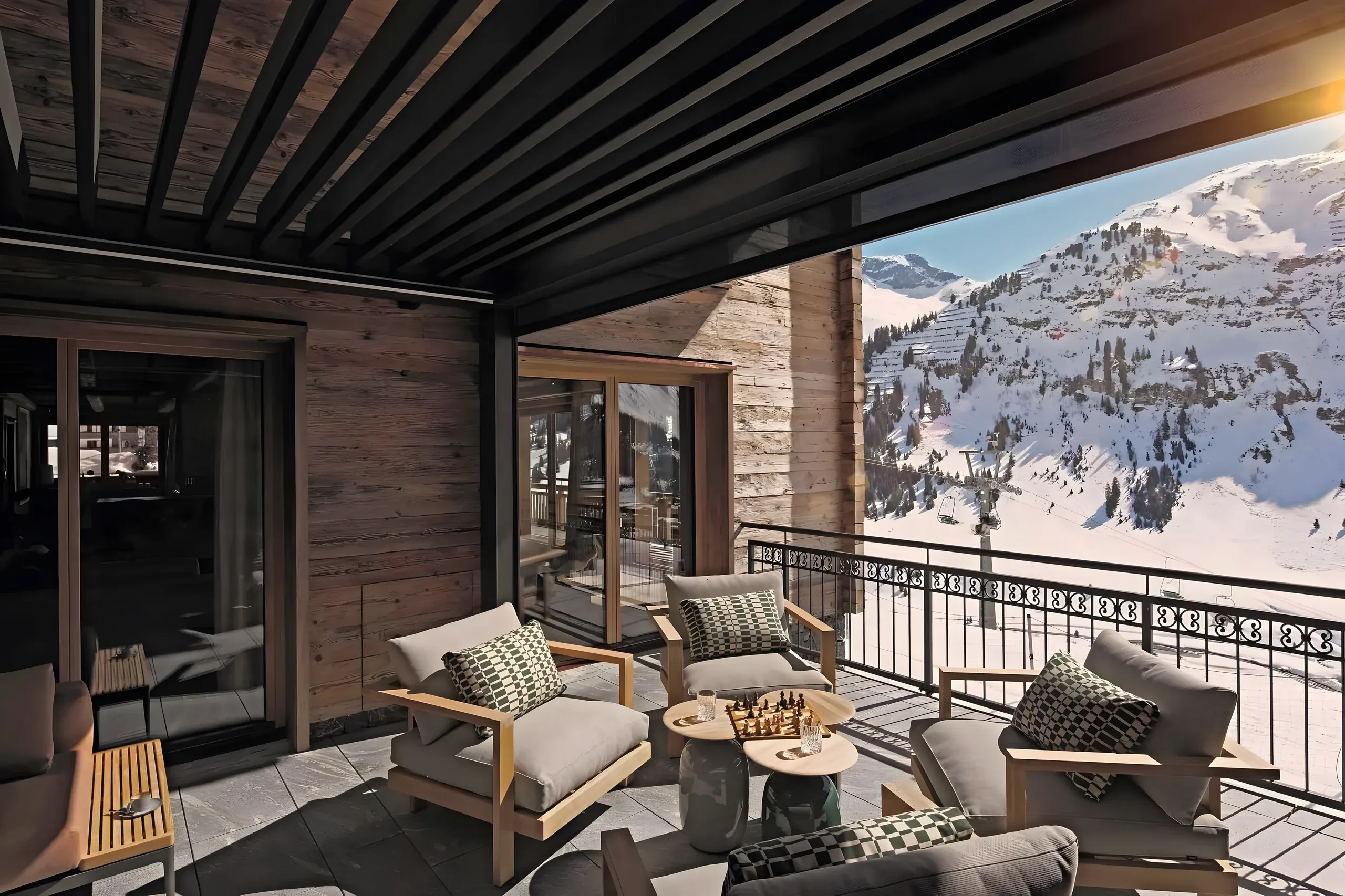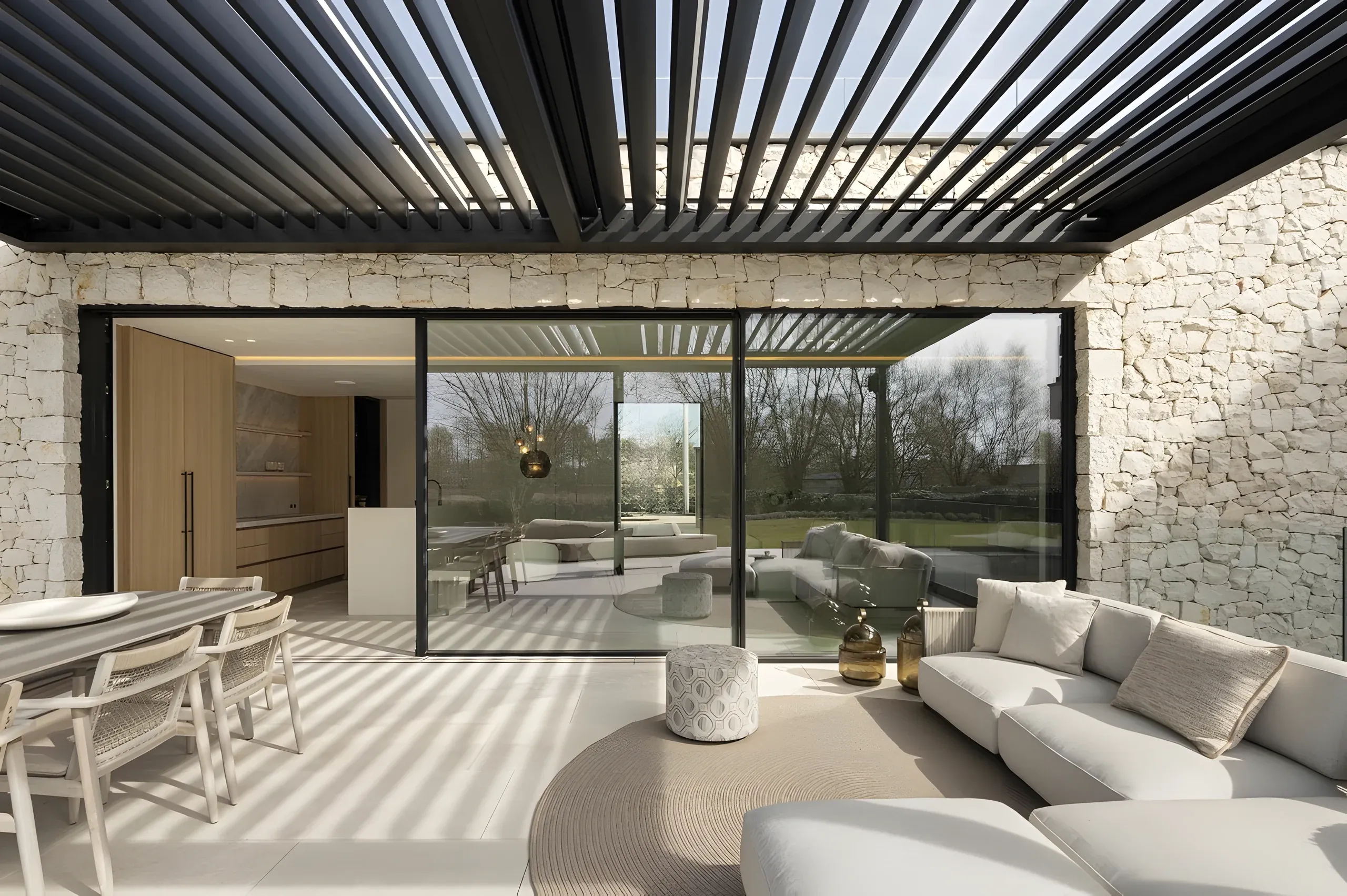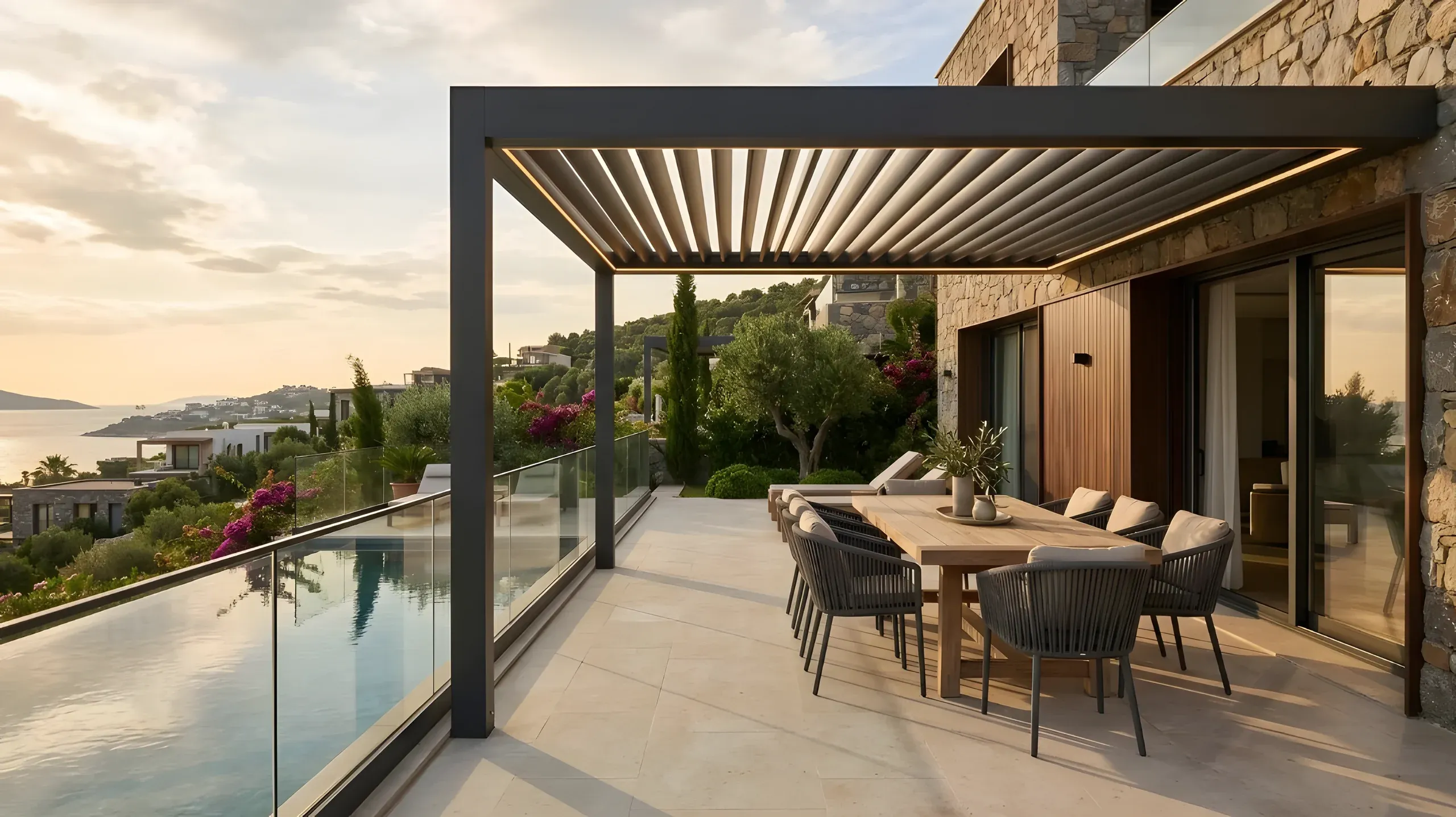
Natural light is the ingredient that most changes how a terrace feels. A pergola that controls it well turns the same space into a bright dining area in the morning, a cool retreat at midday and a cosy porch at sunset. The key to a good pergola with natural light is not blocking the sun but knowing how to regulate it according to the time of day, the season and the orientation of the house. That is why a bioclimatic pergola outperforms both an awning and a fixed roof: light stops being a problem and becomes a variable you control.
Light is not just about quantity, but quality too
When we talk about making the most of natural light on a terrace, we don’t just mean having more hours of daylight. There are three factors worth separating: the useful brightness for enjoying the space, the glare that bothers your eyes and the solar heat gain that warms the area. All three depend on the sun, but they respond to different louvre positions. A terrace can be very bright and cool at the same time if the light comes in reflected and diffused, without direct sun on the table. And it can be dark even when it is very sunny outside, if the roof blocks everything at once. The light control of a bioclimatic pergola acts on all three factors at once: the adjustable louvres let overhead light in, cut out direct sun and, at the same time, vent the hot air that builds up underneath. It is a way of gaining usable space on terraces and in gardens, with more control than a fixed roof and better protection than an awning.
1. Adjustable louvres: an analogue dimmer for daylight
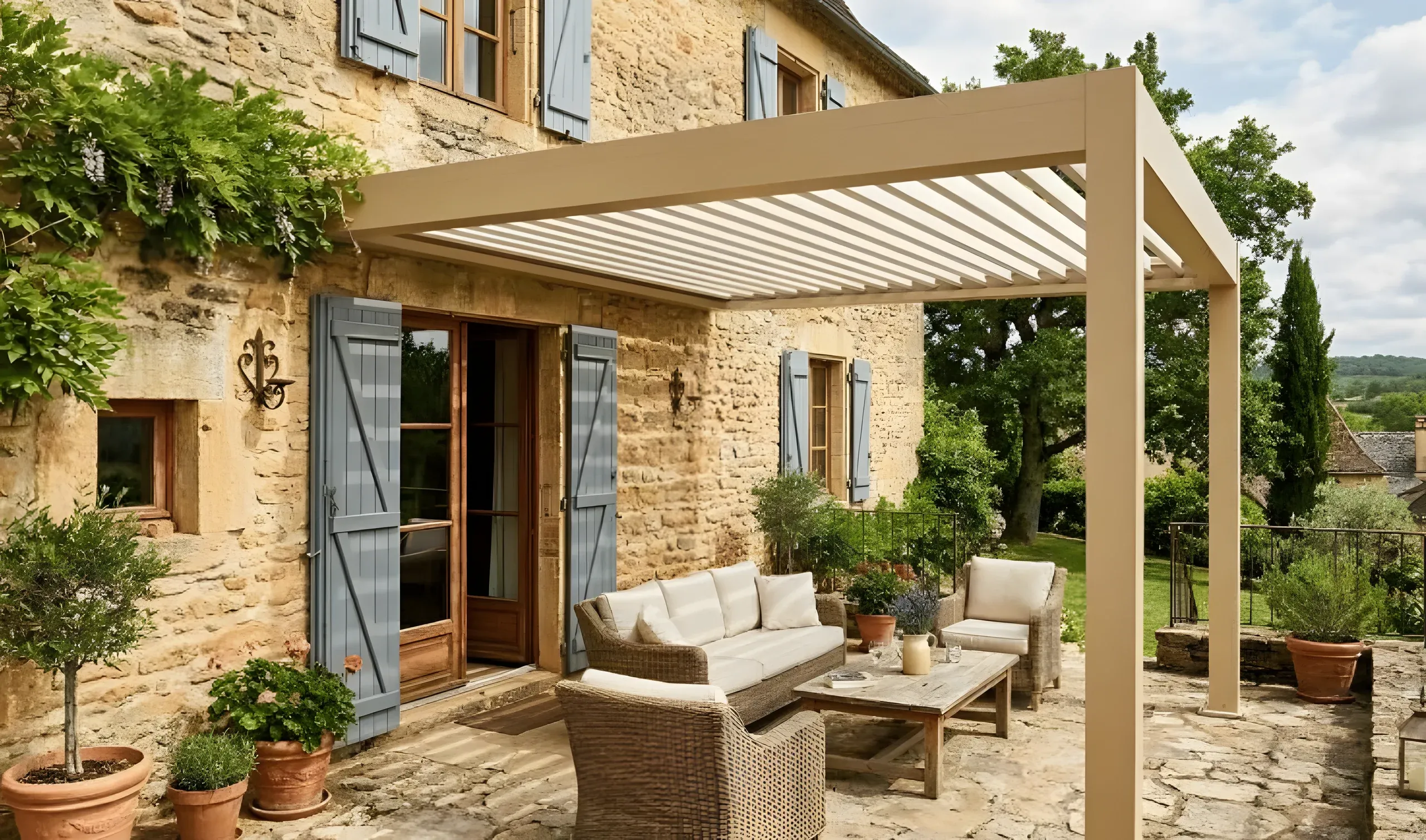
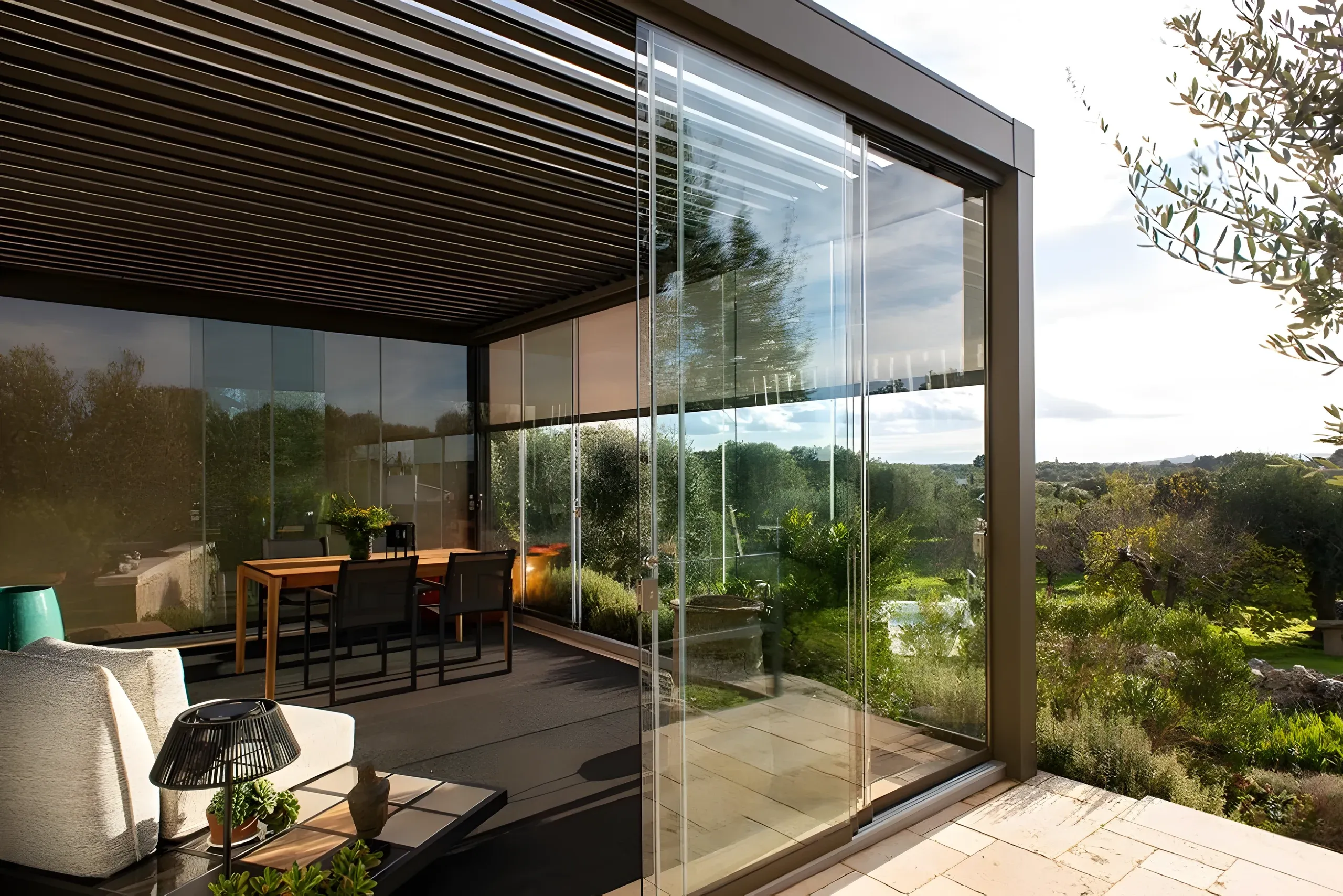
The louvres are the heart of a bioclimatic pergola and, in terms of natural light, they work like a continuous dimmer. It is not an on/off switch for the sun: it is a dial that goes from a see-through roof to a solid one, through every position in between. On a typical spring day in the Berguedà, real-life use looks something like this. At 9 am, with the sun still low, the louvres, set almost vertically, let in warm side light so you can have breakfast outside without feeling cold. At 2 pm, when the sun is high and beating down, the louvres close and the terrace is left in cool shade, ideal for lunch without glare. At 6 pm, as the sun goes down, the louvres partly open again to bring back warm light without losing the shade over the table. You make that adjustment with the remote, in three seconds, without getting up. And if it rains, the louvres close completely and become a watertight roof. The result is an outdoor space that adapts to the light rather than fighting it, something that neither an awning, with only two positions, nor a fixed-roof pergola, which always gives the same kind of shade, can achieve.
2. Terrace orientation and the seasons
Orientation is the first thing we study on every technical visit. Catalonia sits at a latitude of around 41–42°, which means the summer sun climbs very high at midday while in winter it crosses the sky low, almost skimming the horizon. That difference is exactly what we take advantage of. A south-facing terrace gets sun practically all day. In summer, with the louvres closed at midday, the strongest heat is kept out; in winter, with the louvres open or almost parallel to the sun’s rays, you capture as much radiation as possible and warm the space passively. An east-facing orientation is very pleasant: full sun in the morning, natural shade in the afternoon. West-facing is the most demanding, because the low evening sun comes in almost horizontally and dazzles; here, louvres combined with a fabric side screen are the best solution. A north-facing terrace gets constant indirect light with no direct sun, perfect for working or reading outdoors in the height of summer. There is no bad orientation: just a different set-up for each one.
3. Light in the Cerdanya and at altitude
The Cerdanya deserves a chapter of its own. At more than a thousand metres above sea level, solar radiation is noticeably more intense than on the coast, even in winter. Clear days are frequent and the crisp, clear sky multiplies the brightness. That has two practical consequences. The first is that UV radiation is harsher, so the protection a bioclimatic pergola offers is especially valuable in summer. The second, and nicer, is that the low winter sun can be put to better use: with the louvres facing south and properly angled, a terrace in Puigcerdà or Bellver can be used even in January, as long as the wind is kept out with side panels. Our bioclimatic pergolas in the Cerdanya are designed with materials built to withstand mountain conditions: snow, frost and sudden changes in temperature.
4. Automatic sensors: light without thinking about it
For those who don’t want to keep reaching for the remote, sensors automate the day-to-day. A sun sensor detects when radiation exceeds a threshold and closes the louvres automatically to prevent overheating. A wind sensor moves them to a safe position in strong gusts, which matters in areas such as Vic or the Cerdanya. The rain sensor closes the roof when it starts to drizzle, without you having to rush outside. Add a timer schedule and the pergola practically runs itself: it opens in the morning to let the light in, closes at midday in summer and opens again at sunset. You only step in when you want to change the plan.
5. Integrated artificial lighting
Natural light ends when the sun goes down, and that is where integrated lighting comes in. In the pergolas we install, LED strips are housed inside the louvre structure itself and the side profiles, with no visible cables. We recommend warm light, around 2700–3000 K, which extends the outdoor feel without turning the terrace into a brightly lit room. The brightness is fully adjustable from the same remote, so you can go from an intimate dinner to practical barbecue lighting without touching a switch. Well planned, LED lighting gives the space extra hours of use each day without losing that outdoor atmosphere.
6. Made-to-measure design for your terrace
No two terraces are the same, which is why everything we do is made to measure. A technical visit lets us measure the space, check the actual orientation, identify shadows from trees or neighbouring buildings and understand how you live outdoors: family meals, working from home, a hot tub, a play area for the children. With that information we propose the dimensions, number of modules, louvre colour, side panels needed and control system. We offer no-obligation advice, with a detailed quote and clear timescales. We work with high-quality materials to create outdoor spaces that are comfortable all year round, from Berga to Manresa, Vic and the Cerdanya.
Find out more about our bioclimatic pergolas and our installations in the Cerdanya.
For solar data by municipality, see the Solar Radiation Atlas from AEMET, Spain’s national weather agency.
Frequently asked questions
Does a bioclimatic pergola reduce the light coming into the house?
If it's well designed, it doesn't reduce it: it regulates it. With the louvres open, light passes through diffusely and reaches the interior without the direct glare of the midday sun. In winter, by setting the louvres almost parallel to the low sun, most of the natural daylight is kept. The difference compared with a fixed roof or an awning is that you decide, at any moment, how much light you want to let in.
Which orientation is best for a pergola in Catalonia?
It depends on how you want to use it. A south-facing pergola gets the most hours of sun all year and is ideal if you want warmth in winter. East-facing gives soft morning light and afternoon shade, perfect for breakfast outdoors. West-facing gets strong sun in the evening, when adjustable louvres really make a difference. North-facing gives steady light without direct sun, very pleasant in summer.
Do the louvres let in enough light when they're open?
Yes. With the louvres fully open, the pergola behaves like a roof that is practically transparent to the sun and overhead light. Daylight comes in from above and you keep the feeling of open sky. If you want even more light, you can combine open louvres with retracted side screens: the space is fully lit and ventilated, with no visual barriers towards the garden or the mountains.
Does a pergola work in cold areas like the Cerdanya?
It works very well. In the Cerdanya winters are long, but the days are usually clear, with strong sunshine because of the altitude. A bioclimatic pergola with well-angled louvres captures that low winter sun and lets you use the terrace even in cold weather. In summer it protects you from UV radiation, which is higher in the mountains. We use materials designed to cope with snow, ice and sudden temperature changes.
Can I combine the pergola with LED lighting for the evening?
Yes, and it's one of the most popular add-ons. Perimeter LED strips are housed inside the structure itself, with no visible cables, and the brightness can be adjusted from the same remote that controls the louvres. We recommend warm, low-intensity light that extends the outdoor feel without turning the terrace into a shop window. That way the pergola stays useful after the sun goes down.