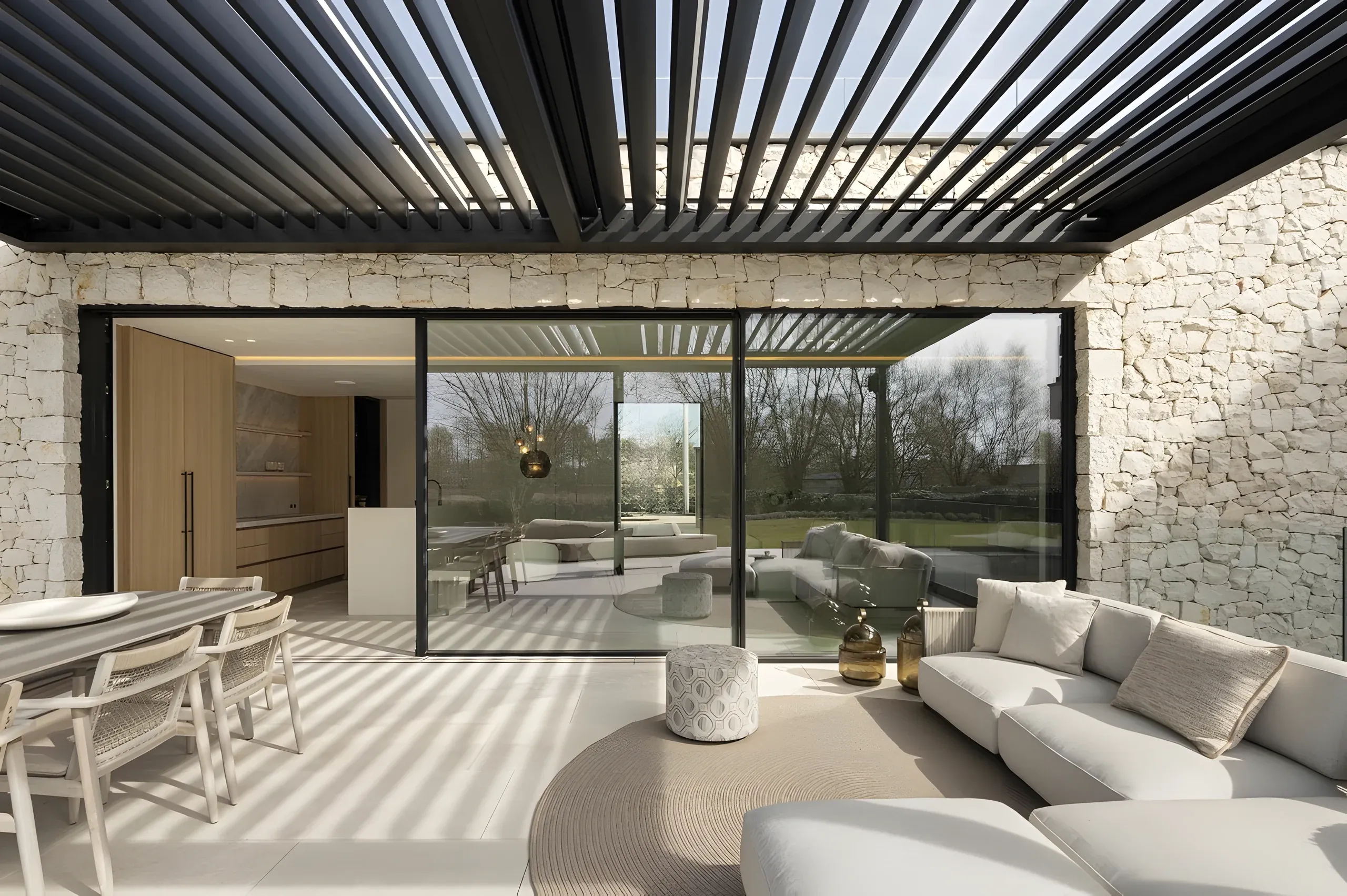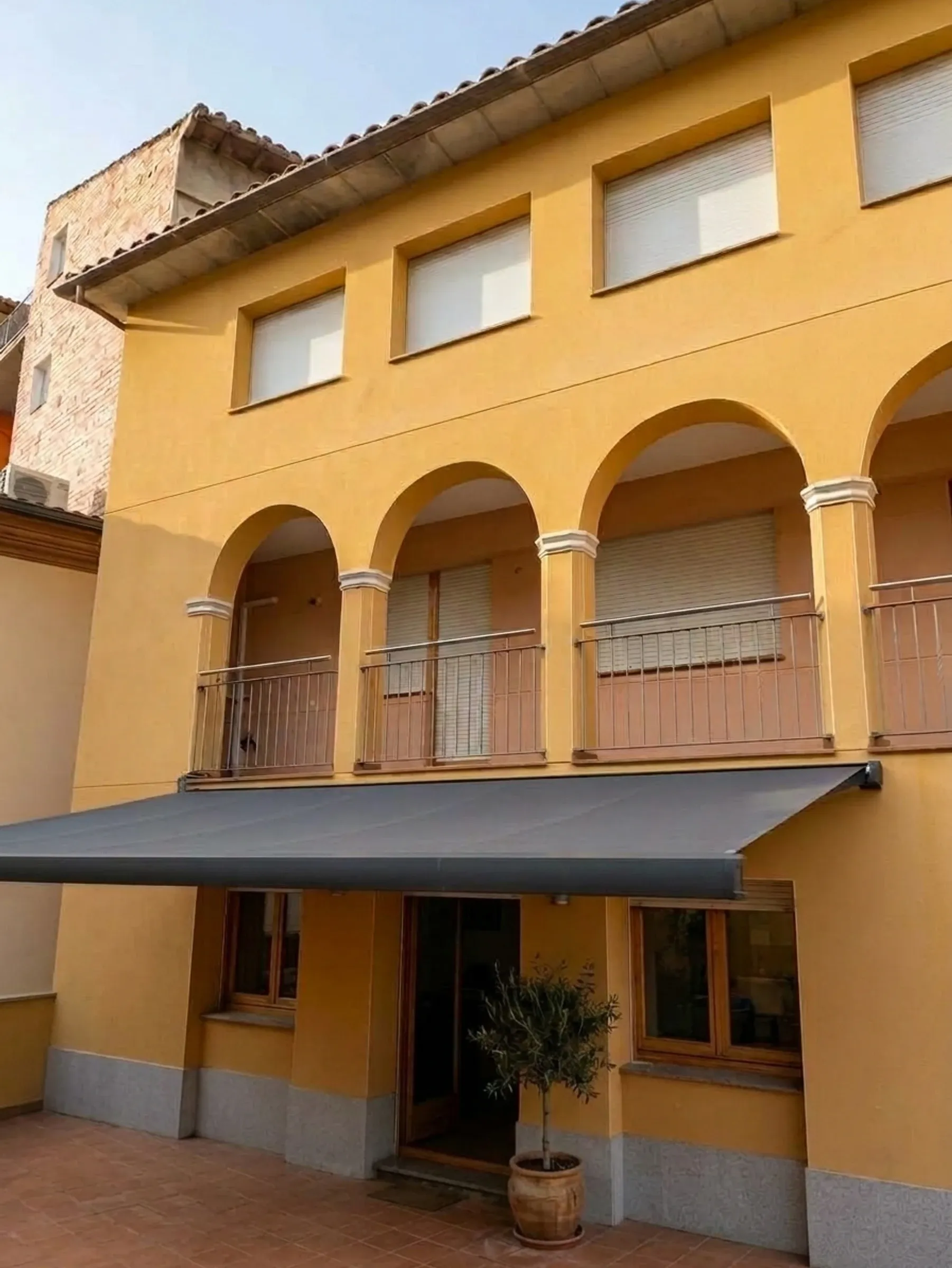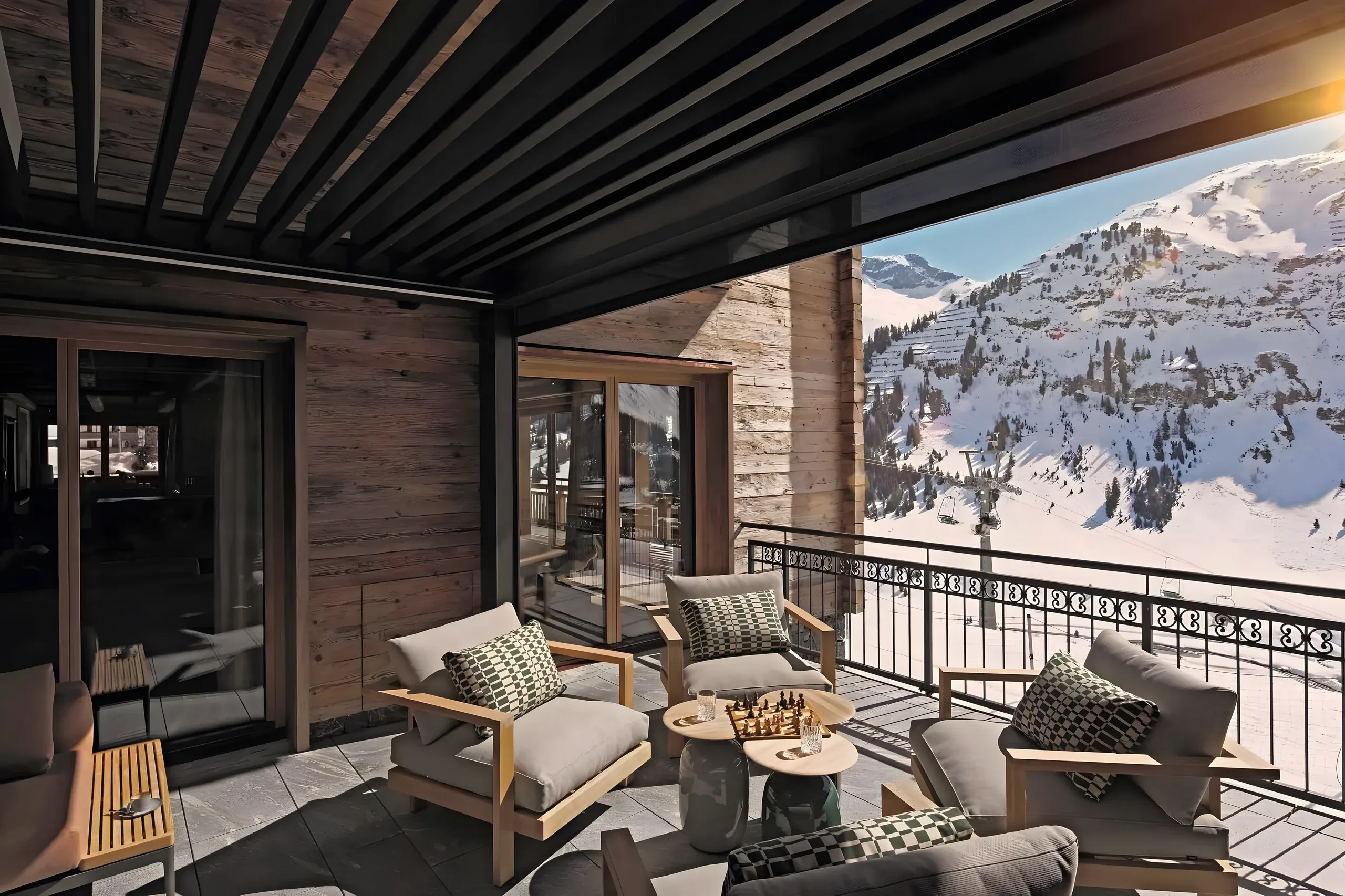
In the Cerdanya you enjoy a bioclimatic pergola in summer, but you choose it with winter in mind. A terrace in Puigcerdà, Alp or Bellver can spend weeks under snow, with frosty nights and bright sunny days, often with nobody at home to keep an eye on it. The good news is that a properly specified aluminium pergola copes with all of this. The bad news is that not every pergola is suitable for every altitude. This guide explains what snow does to a pergola, which figures to ask for before you buy and how to prepare it so it reaches spring in the same condition as day one.
What snow does to a pergola
Snow is not just “a bit of weight on top”. Its effect depends on how much falls, what kind of snow it is and where it ends up:
- Accumulated load: several snowfalls in a row with no thaw in between add up. The roof is not carrying one snowfall but everything that builds up over days or weeks.
- Wet versus dry snow: the same depth can weigh very different amounts. Powder is light; wet snow, or snow that has settled and started to melt, is considerably heavier. That is why the number of centimetres you see on the louvres says little on its own.
- Drifting: wind moves snow around and piles it up against walls, in corners or below a higher roof. A pergola attached under the eaves can receive snow sliding off the house roof on top of what falls on it directly.
- Ice: meltwater that refreezes overnight can lock louvres, seals or the tracks of side enclosures.
- Freeze-thaw cycles: in the Cerdanya it is common for temperatures to rise in the sun by day and drop below freezing at night. Repeated all winter, that cycle takes its toll on seals, gutters and drains.
The structure is specified for the site, not the catalogue
In Spain, the loads a structure must withstand are set by the Technical Building Code (CTE), specifically the basic document on structural safety and actions on buildings (DB SE-AE). For snow, the reference load depends on the site’s climate zone and altitude: the higher the site, the greater the load to be considered. A house on the valley floor and another on a hillside development need not share the same value, even if they are only a few kilometres apart.
That leads to the key question before buying: what snow and wind load does this model withstand, at this size and in this configuration? The answer has to come from the manufacturer’s certified data, not a generic brochure. And it changes with post spacing, louvre length, profile type and whether the pergola is freestanding or wall-mounted. The same range can be more than adequate at one size and fall short if the spans get longer.
At Bestecnics we start from the exact location of your home and, in our proposal, give you in writing the snow and wind values the manufacturer certifies for the configuration we recommend. If a size does not meet them, the usual answer is to shorten spans, add a post or move up to a sturdier profile, rather than hoping “it won’t snow that much this winter”.
A real example: the D’Glass DG210 test results
To show what data to ask for, these are the test results published by the manufacturer D’Glass (Teyco group) for its DG210 bioclimatic pergola, one of the models we install:
- Snow: applied load of 158.33 kg/m² (about 1.55 kN/m², the unit used by the CTE), under standard UNE-EN 12833:2011.
- Wind: class 6, at a pressure of 482.79 N/m², equivalent to about 101 km/h, with 1.2 mm residual deflection, under UNE-EN 1932:2014.
- Watertightness: 2 L/(m²·min) with the louvres closed, under UNE-EN 1873.
- Maximum sizes: louvres up to 4.50 m long and up to 7 m in length in a single module; with joined modules, up to 8.20 × 13.20 m.
These are good figures for a louvred pergola, but they need reading carefully: they are test results for one specific configuration, not the permissible load of every installation. The right move is to compare them with the snow load the CTE sets for your home’s altitude and with the actual dimensions of your project. If your site calls for more, the answer is extra posts, shorter spans or a different profile. You can check the data on the official DG210 data sheet (in Spanish).
Louvres open or closed when it snows
This is the most common question, and there is no universal answer. What can be explained is the general logic:
- Louvres closed: the roof acts as a continuous surface and the snow stays on top. The whole load is carried by the louvres, beams and posts, which must be sized for it.
- Louvres open or vertical: some of the snow falls between the louvres and less weight builds up on top. In exchange, snow ends up under the pergola and ice can form on the pivots and louvre edges.
Some manufacturers recommend leaving the roof open when snow is forecast; others specify a particular position or set conditions depending on the model. Your pergola manufacturer’s instructions are what count, and we go through them with you at handover. One rule applies to every model: do not run the motor while the louvres are frozen or loaded with snow, as this strains the mechanism and the seals.
Sensors and automation for a second home
Many houses in the Cerdanya are second homes. If snow arrives on a Tuesday and you don’t come up until Friday, the pergola needs to be in the right position already, without anyone touching it. That is what these are for:
- Wind sensor: moves the louvres to their safety position when gusts exceed a set threshold.
- Rain sensor and, on models that support them, temperature or snow sensors, which let you programme the winter behaviour the manufacturer recommends.
- App control: check the pergola’s status and move it remotely ahead of forecast snow, always within the manufacturer’s guidelines.
Automation helps, but it is no substitute for a properly specified structure: the pergola must withstand the local snow load even if nobody moves it all winter.
Drainage, gutters and ice
On a bioclimatic pergola, rain and meltwater run along gutters built into the frame and down inside the posts. In the mountains, that circuit has to be designed with ice in mind:
- Downpipes should discharge to a point that won’t freeze or clog, ideally connected to a drain, not onto paving where a sheet of ice can form.
- Gutters should go into winter clear of leaves and pine needles: a blockage holding water that then freezes can overflow or damage the profile.
- Check where snow sliding off the pergola and the house roof will land, so it doesn’t block a water outlet or a path.
Foundations, anchoring and wind in the valley
Snow load passes from the roof to the posts and from there into the ground, so anchoring matters as much as the profile. On a concrete slab, chemical or mechanical anchors are usually used; in a garden, footings may be needed. In ground that freezes, foundations must be well bedded so the posts don’t shift with freeze-thaw cycles.
Wind matters too. The Cerdanya is a wide, open valley where gusts can be strong at some sites, and a pergola is subject to both pressure and uplift. The manufacturer’s wind data and the type of anchoring should be reviewed together, just like the snow data.
Glass enclosures and screens in winter
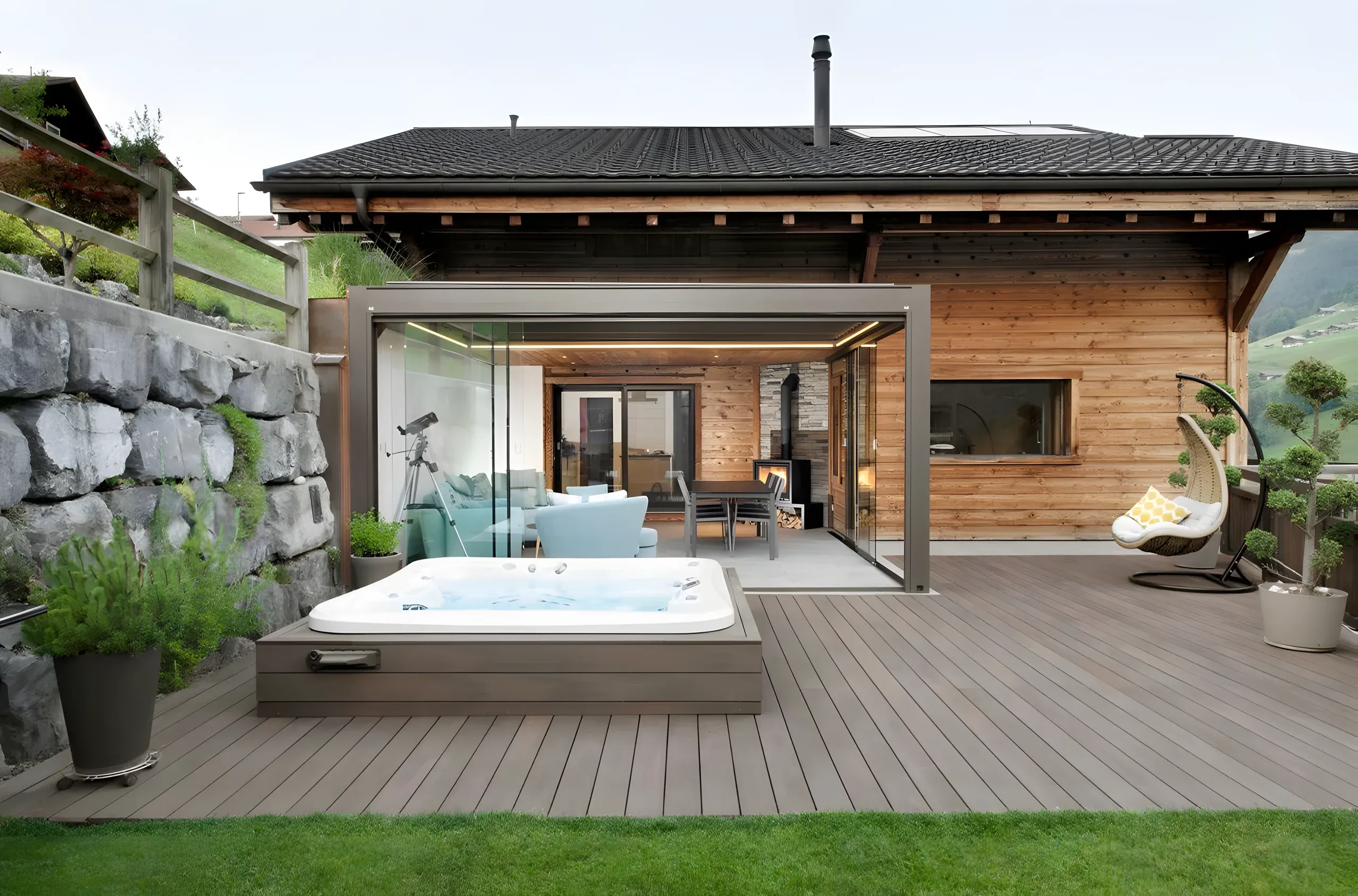
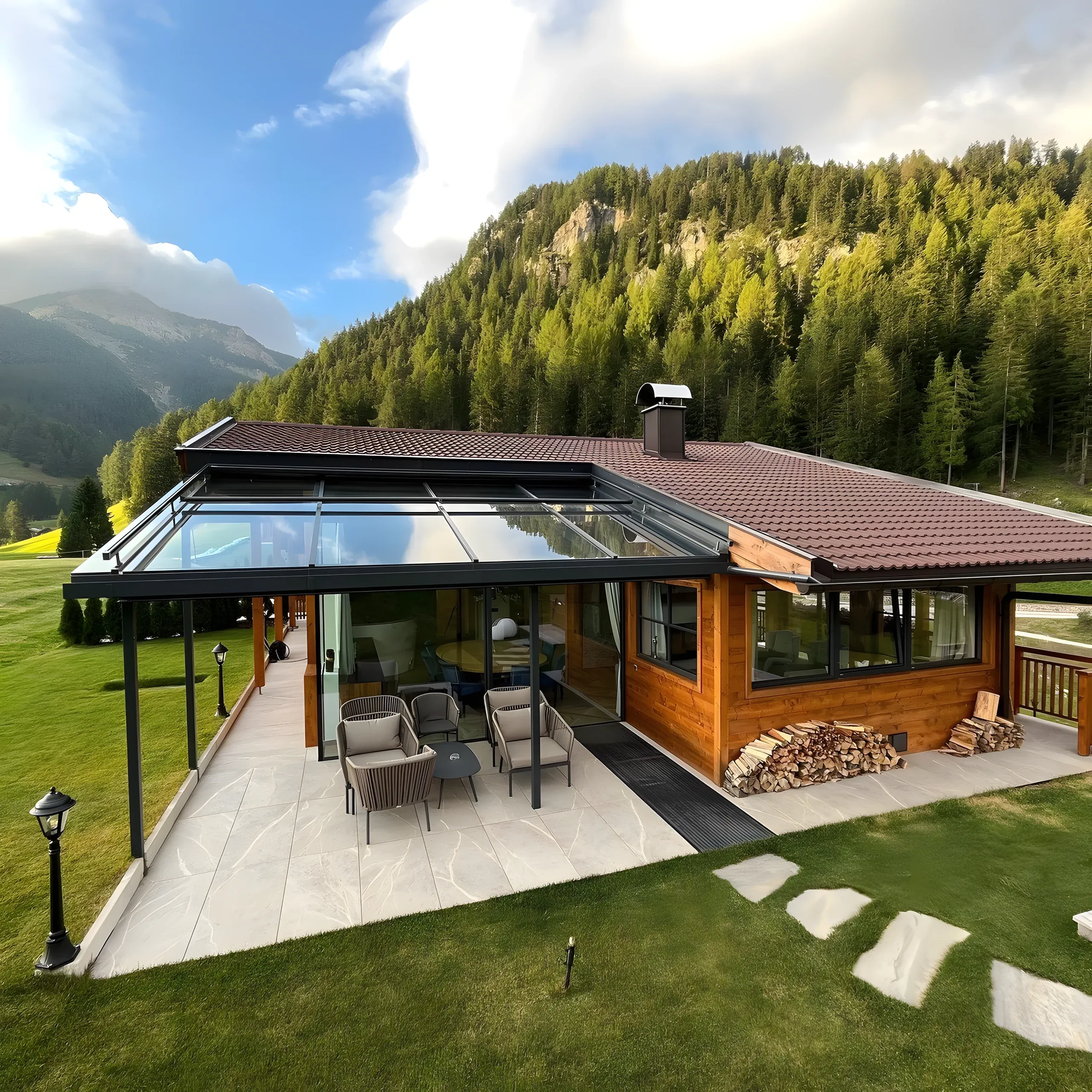
Enclosing the sides with glass curtains or screens lets you use the pergola on sunny winter days, sheltered from the wind. It works very well in the Cerdanya, but snow brings a few particular issues:
- Snow falling off the roof piles up along the sides and can press against the glass or screens from outside.
- Bottom tracks can freeze: don’t force the panels or motors if they won’t move.
- Fabric screens usually have their own wind and winter-use limits; follow the manufacturer’s guidance on whether they should stay retracted.
Maintenance before and after winter
Two check-ups a year are enough for most mountain pergolas:
- In autumn: clean gutters and downpipes, check the louvre seals, test the sensors and remote, check fixings and anchors, and set the winter mode.
- In spring: look for marked profiles, damaged seals or debris, wash the powder coating with water and mild soap, and check the louvres rotate and close properly.
For the full calendar, see our guide to pergola and awning maintenance.
Checklist before buying a pergola for the Cerdanya
- Was the snow load based on the altitude and exact location of the house?
- Do you have the manufacturer’s certified snow and wind load in writing for your size and configuration?
- Has snow sliding off the house roof or drifting been taken into account?
- What does the manufacturer say about louvre position in snow and frost?
- Does it include sensors and remote control suited to a house that isn’t always occupied?
- Where do the downpipes discharge, and what happens when it freezes?
- What anchoring or foundation is proposed, and on what base?
- If there are enclosures, how do they cope with snow and ice in the tracks?
- Who handles maintenance, and who responds if something fails in mid-winter?
To go over the general points as well (louvres, finishes, motorisation or permits), see how to choose your bioclimatic pergola.
Bioclimatic pergolas in the Cerdanya with Bestecnics
We install pergolas throughout the county from our base in the Berguedà. See how we work in the area on our pages for bioclimatic pergolas in the Cerdanya and bioclimatic pergolas in Puigcerdà, or learn about the product in detail on bioclimatic pergolas. Tell us where your home is and we’ll propose a model with its snow and wind data in writing.
To consult the building load regulations, visit Spain’s Technical Building Code website (basic document SE-AE, in Spanish).
Frequently asked questions
How much snow can a bioclimatic pergola take?
It depends on the model, its size and how it is configured: post spacing, louvre length and profile type all change the permissible load considerably. There is no single figure that applies to every pergola. The right approach is to start from the snow load that applies to the site under Spain's building code (CTE), which rises with altitude and climate zone, and check that the manufacturer's certified data for that specific configuration covers it. We give you those figures in writing in our proposal.
Can the louvres be left closed with snow on top?
Each manufacturer specifies how the roof should be left when snow is forecast, and their instructions should be followed to the letter. In general, with the louvres closed, snow builds up on the roof and the structure has to carry all that weight; with them open, some of the snow falls through, but not every model recommends or allows this in all conditions. What you should never do is move the louvres while they are frozen or loaded with snow.
What happens if it snows while I'm away?
With a second home that is the norm. That is why we recommend motorisation with sensors (wind, rain and, where the model supports them, temperature or snow) that move the roof to the position the manufacturer specifies, plus app control so you can check it remotely. Even so, no automation replaces a correctly specified structure: it must be sized for the local snow load even if nobody touches it all winter.
Do I need to clear snow off the pergola?
If the structure is correctly sized for the area, normal snowfall should not need clearing. If more builds up than usual, because of drifting or several snowfalls in a row, it can be removed carefully with a plastic tool, without striking or forcing the louvres, never climbing onto the roof and never running the motor while there is ice. If in doubt, call your installer.
Can a pergola in the Cerdanya be enclosed with glass?
Yes. Glass curtains and side screens let you use the pergola for much of the winter, sheltered from the wind. Bear in mind that snow sliding off the roof piles up along the sides and that ice can jam the bottom tracks. So drainage needs careful planning, the enclosures should be left in the position the manufacturer recommends for winter, and they should never be forced when frozen.